

Sennheiser HD 660S2
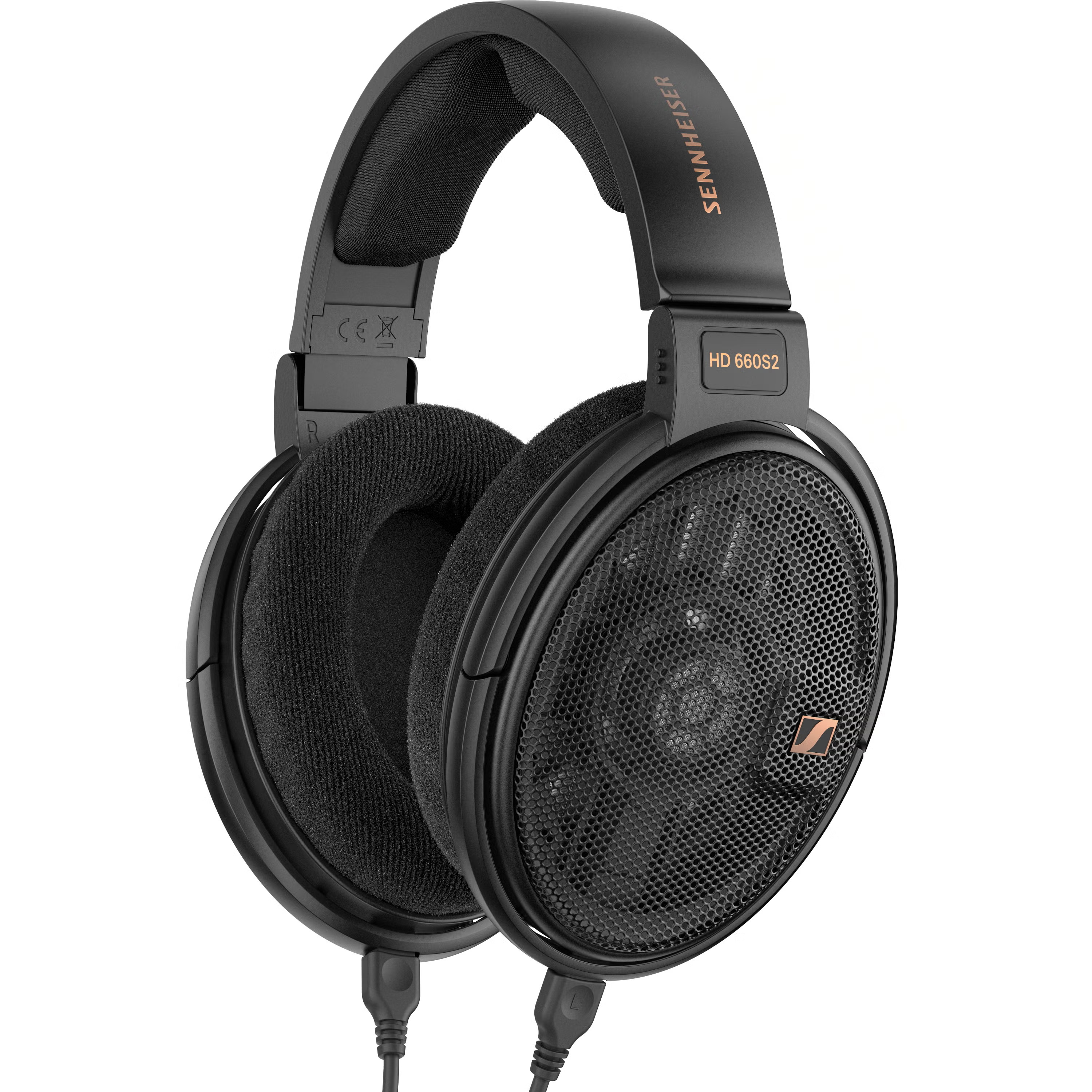
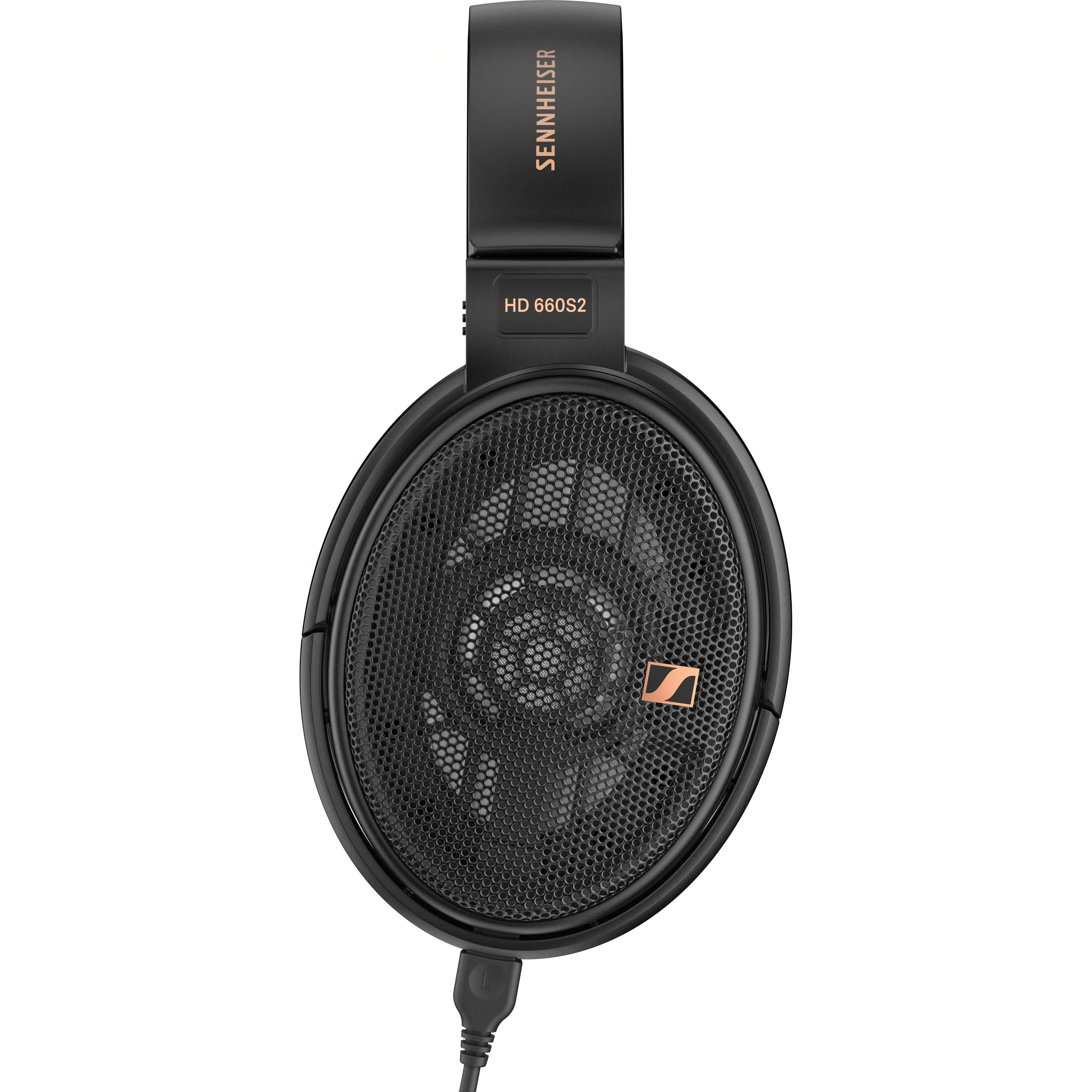
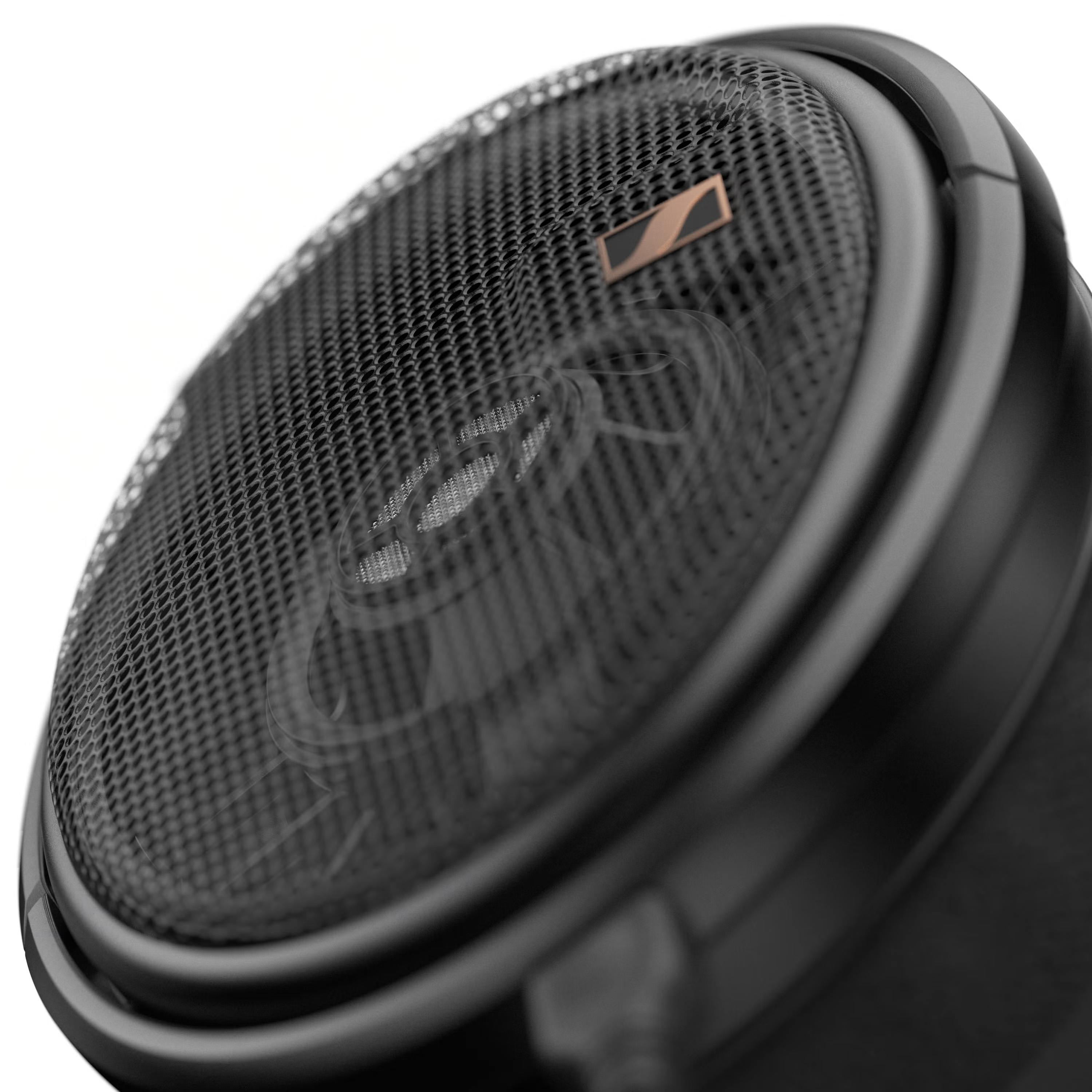
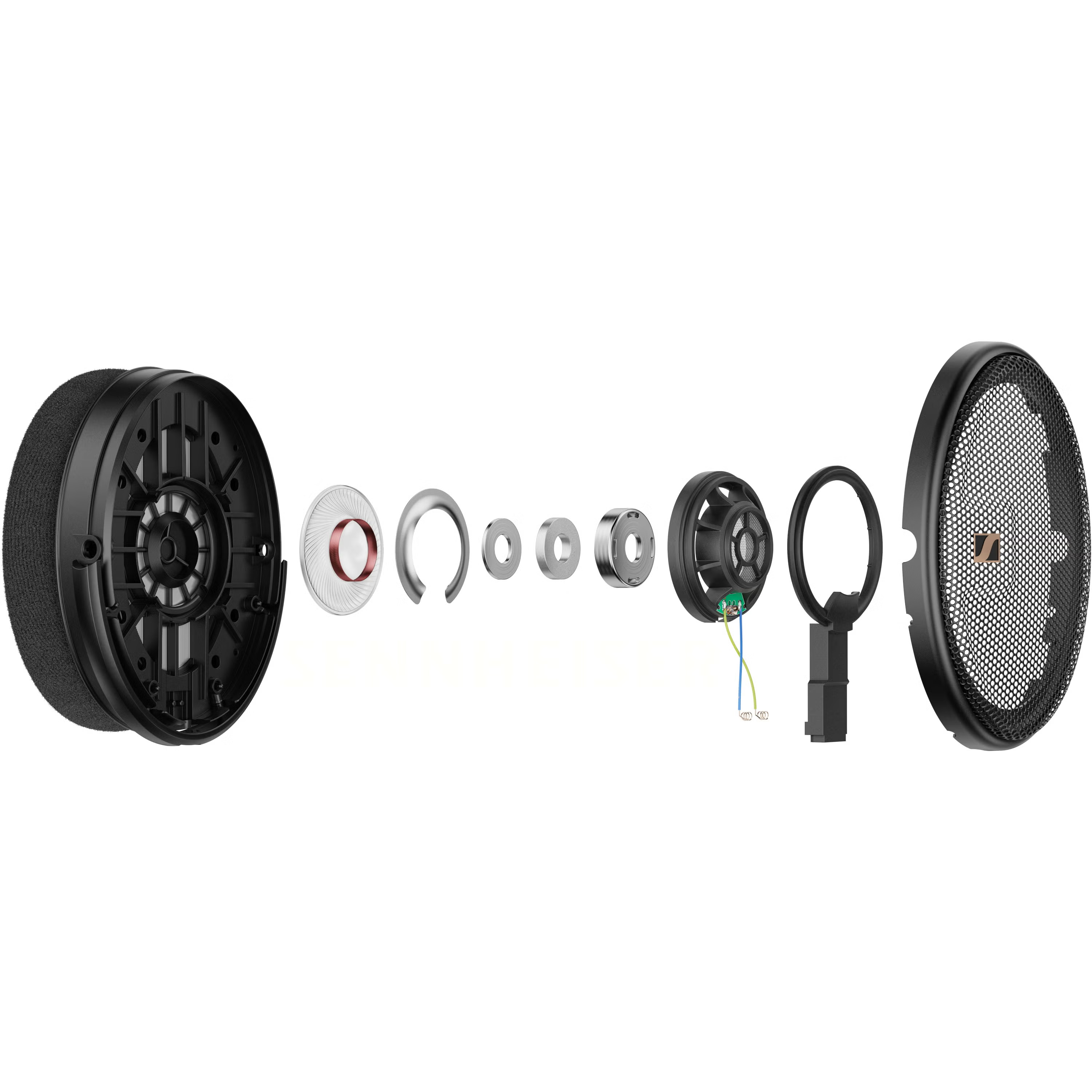
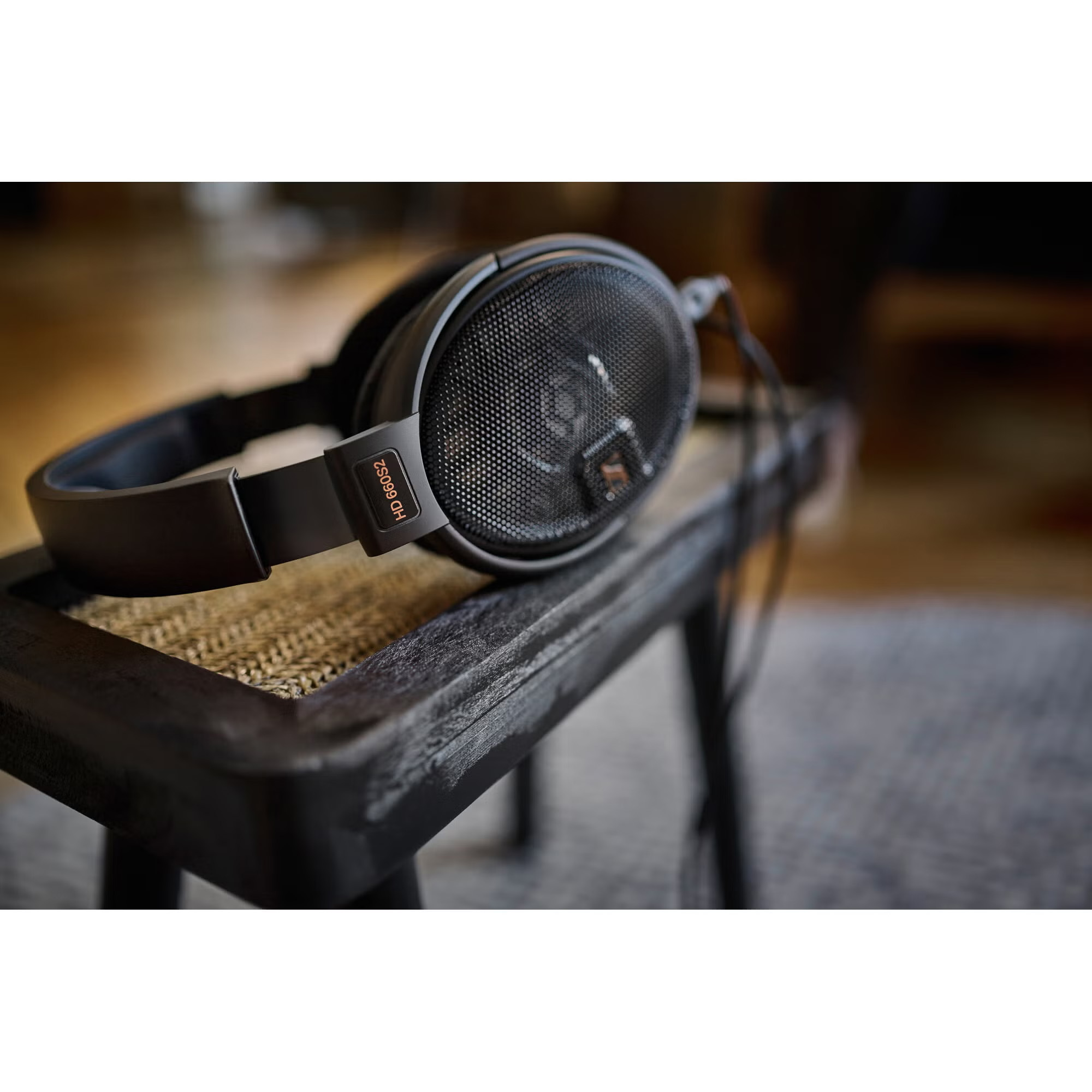
The Sennheiser HD 660S2 is an open-back, full-size audiophile headphone built for long, focused listening sessions at home. It keeps the familiar comfort and “easy to live with” character of Sennheiser’s 600-series lineage, but adds a more extended low-end foundation—aimed at listeners who love natural mids and timbre, yet want a bit more sub-bass reach than earlier variants.
Why it’s a nice headphone
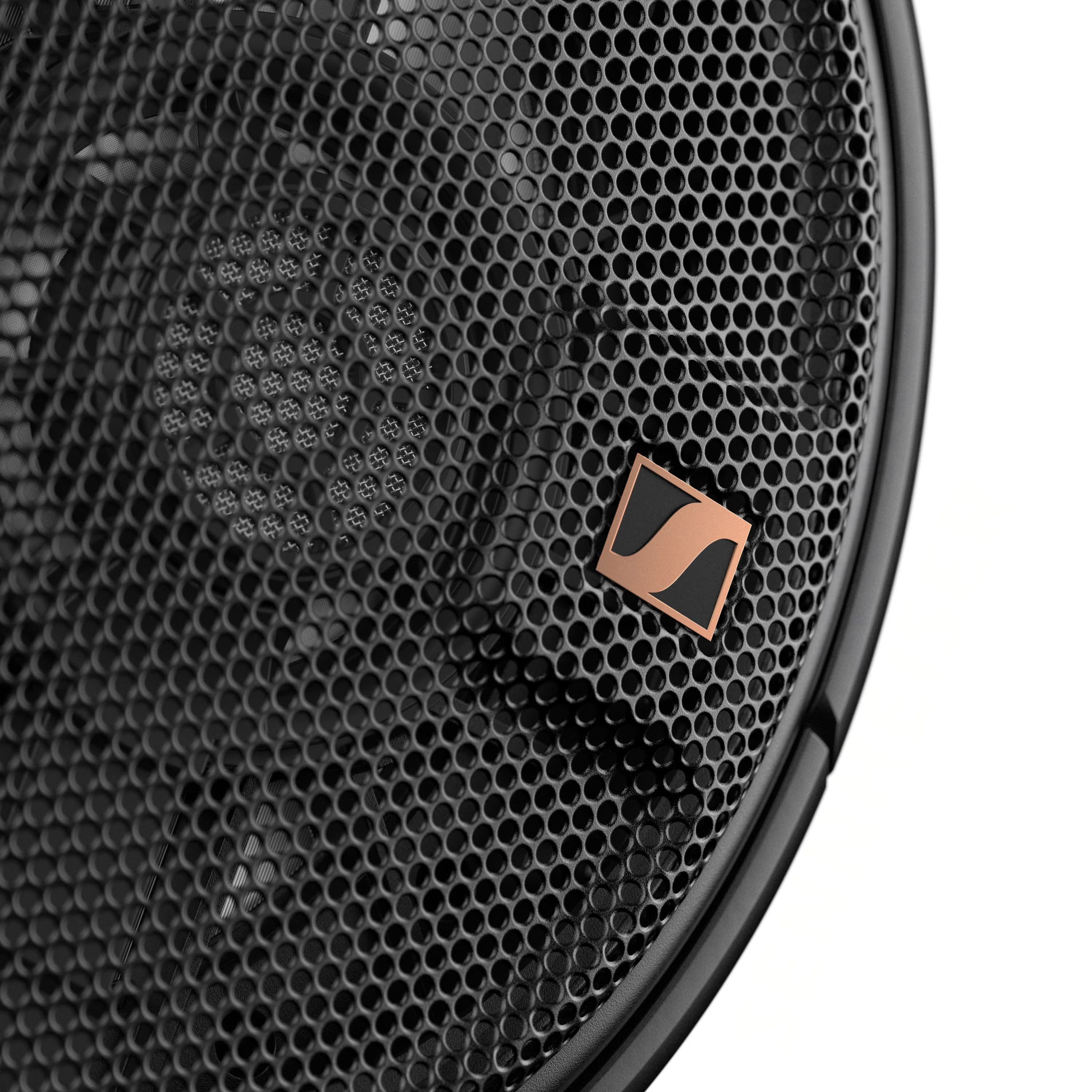
- Spacious, speaker-like presentation: the open-back design helps create an airy sound with clear imaging—great for acoustic, jazz, classical, and well-recorded vocals, but also very enjoyable for modern genres when paired with a good chain.
- Refined tonal balance with deeper bass extension: the HD 660S2 is specifically tuned to deliver more impact down low while staying smooth and non-fatiguing for long sessions.
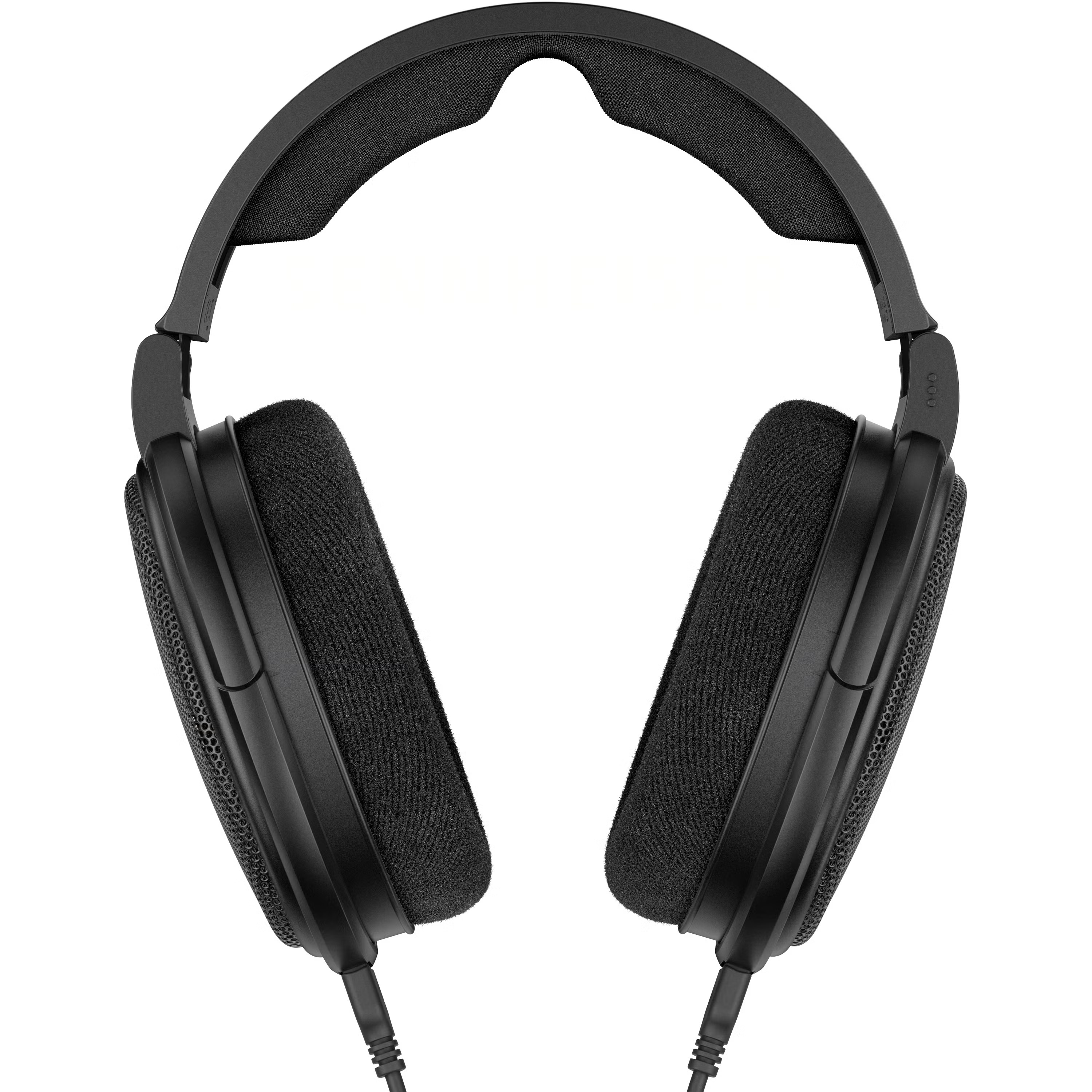
- Comfort that encourages “one more album”: plush velour pads, low overall weight, and a proven chassis design make it an easy headphone to wear for hours.
- Serious hi-fi connectivity out of the box: it ships with both a single-ended 6.3 mm cable and a balanced 4.4 mm cable, plus a 6.3 → 3.5 mm adapter—so it plays nicely with desktop amps, DAC/amps, and many modern DAPs.
Historical significance
The HD 660S2 matters because it’s part of the long-running HD 600-series family—one of the most influential open-back “reference” lines in headphone hi-fi. That lineage includes classics like the HD 600 (introduced in 1997) and the HD 650 (introduced in 2003), both widely associated with natural timbre and a “music-first” presentation.
Introduced for sale in February 2023, the HD 660S2 is essentially a modern continuation of that philosophy: keep the comfort and midrange realism, update the driver system, and extend the bass response so it better matches how today’s listeners enjoy music across genres.
Main specifications
| Spec | Sennheiser HD 660S2 |
|---|---|
| Type | Wired, open-back, over-ear (circumaural), dynamic |
| Driver size | 38 mm |
| Impedance | 300 Ω |
| Frequency response | 8 Hz – 41,500 Hz |
| Sensitivity (SPL) | 104 dB (1 kHz, 1 Vrms) |
| Total harmonic distortion (THD) | < 0.04% (1 kHz, 100 dB) |
| Weight | 260 g (without cable) |
| Cables included | 1.8 m cable with 6.3 mm plug (single-ended) + 1.8 m cable with 4.4 mm plug (balanced) |
| Adapter included | 6.3 mm → 3.5 mm |
| Build / comfort notes | Velour ear pads; detachable dual-sided cables |
| Design / manufacturing | Designed in Germany; made in Ireland |
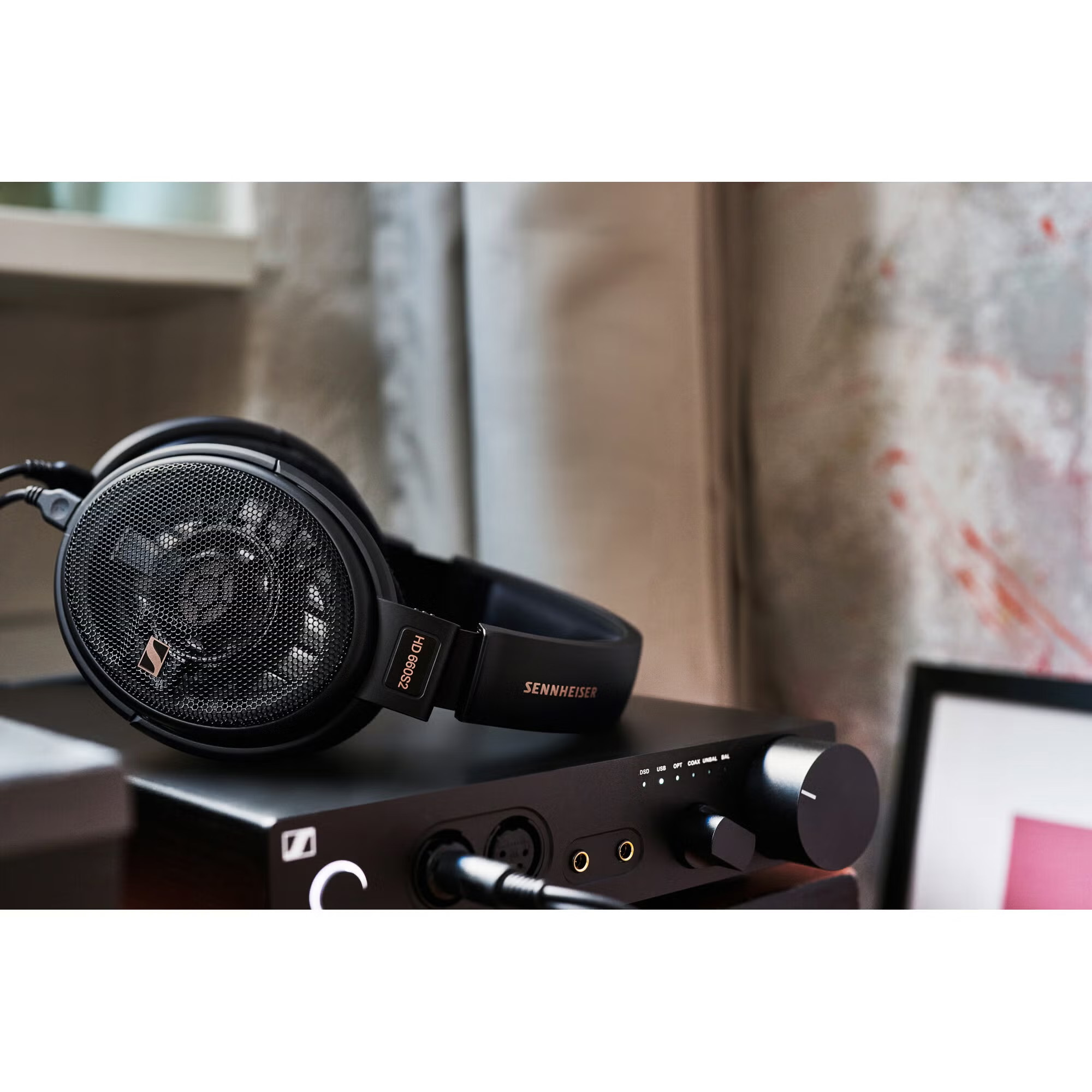
Tip: With its 300 Ω impedance, the HD 660S2 typically shines most when paired with a capable headphone amp (or a strong DAC/amp), especially if you listen at moderate-to-loud levels or want the best bass control.
Setup Recommendations
| Source Chain | Soundstage | Depth & Detail | Tonal Coloration | Best-Suited Genres |
|---|---|---|---|---|
| Thorens TD145 > Pioneer SA-8800 (vinyl) | Moderate | Good detail | Balanced | Rock, Pop |
| Lenco L78SE > Marantz 2245 > Cayin HA-1A MK2 (vinyl) | Moderate | Organic depth, moderate detail | Very warm & smooth | Vocal Jazz, Soul |
| Lenco L78SE > Marantz 2245 (headphone out) | Moderate | Decent | Warm | Jazz, Easy Listening |
| Dual 721 > Pioneer SA-9500 (vinyl) | Moderate | Excellent | Balanced (slight warmth) | Classical, Progressive Rock |
| MacBook Pro > FiiO K11 DAC (Spotify Lossless) | Moderate | Good | Mildly warm | All-rounder |
| MacBook Pro headphone jack (Spotify Lossless) | Narrow | Poor (underpowered) | Thin | Not recommended |
| iPhone 15 Pro > FiiO KA11 dongle (Spotify Lossless) | Moderate | Decent | Warm, laid-back | Acoustic, Folk |
More background on the recommendations for the Sennheiser HD 660S2
The HD 660S2 is Sennheiser’s update to their 600-series open-back dynamic headphones. It has a 300 Ω impedance and a classic Sennheiser mid-centric tuning with notable improvements in bass and treble extension over its predecessors. The S2 is described as a “denser, creamier and bassier version of HD650, with more transparency… and a much better bang in the bass region.” Indeed, Sennheiser addressed the sub-bass roll-off: the S2 offers ~5–6 dB more output in the lowest octaves than the original HD660S, giving real rumble and punch while retaining the sweet mids. It remains a warm, inviting headphone with that smooth “Sennheiser sound” akin to a well-aged single-malt whiskey. However, like others in the HD6XX family, its soundstage is fairly intimate – a “closer-to-your-face” presentation with limited width and depth. Imaging is precise but not expansive; you don’t buy the HD660S2 for out-of-head soundstage but rather for its lovely tonality and improved detail. Notably, S2 has excellent detail retrieval for its class, nearly approaching the HD800 in revealing ability, thanks to reduced distortion and the lifting of the old “Sennheiser veil” (treble is more extended and textured now without harsh peaks).
Below we assess the HD660S2 on each chain:
TD145 > Pioneer SA-8800
Soundstage: Narrow-medium. The HD660S2’s inherently modest stage remains so; the Pioneer SA-8800’s neutral, powerful output doesn’t significantly widen it. You get a focused, in-head image – instruments are placed clearly but not far out.
Depth/Detail: High detail, moderate depth. The Audio Technica VM95ML cart provides plenty of detail and the Pioneer drives the 300 Ω Sennheiser effortlessly. The S2 sounds very clear and resolving (no veil) – subtle textures in vocals and guitars are laid bare. However, depth layering is only okay (the S2’s mid-forward nature tends to flatten front-back imaging).
Tonal Color: Neutral-warm and dynamic. The bright-leaning AT cart plus Pioneer amp add a touch of crispness to the HD660S2’s warm tone, yielding a nicely balanced sound. Bass is taut and newly authoritative (the extra sub-bass of S2 comes through with this chain’s strong drive) Highs are smooth yet present – no harshness.
Best Genres: Rock, metal, prog – anything needing punch and clarity. This combo’s tight bass and forward mids excel with 70s progressive rock and modern rock/metal, where the intimacy of the soundstage actually emphasizes guitars and vocals. Also great for folk/acoustic (the slight brightening from the AT cart gives lovely treble detail on strings).
Lenco L78SE > Marantz 2245 > Cayin HA-1A Mk2
Soundstage: Moderate width with excellent depth. Tubes tend to add dimensionality: on the HD660S2, the Cayin tube amp (set to 151–300 Ω tap) broadens the soundstage a bit and adds depth, though it’s still not “wide.” You’ll notice more ambiance and a sense of space between instruments than usual for a 6XX Senn.
Depth/Detail: Medium-High depth, medium detail. The analog warmth slightly softens micro-detail – the S2’s improved transparency is still evident, but the Marantz+tube chain introduces a gentle haze. On the plus side, depth imaging improves; layering of instruments (front-to-back) feels more 3D due to tube harmonics.
Tonal Color: Very warm, lush. The Marantz 2245’s famously “warm, mid-forward” tube-like sound combined with the Cayin’s true tubes makes the HD660S2 sound exceptionally rich. Bass is big and rounded (the S2’s bass boost plus tube bloom – fortunately the Cayin controls it well so it’s not loose). The midrange becomes ultra-smooth and “creamy,” and treble is relaxed (perhaps even more forgiving than stock, rolling off a hair of the new treble extension).
Best Genres: Jazz, blues, vocal-centric, classic rock. Jazz vocal trios sound magical – the intimate staging puts the singer in the room, and the warmth adds soul to saxophones and pianos. 70s rock (e.g. Fleetwood Mac, Led Zeppelin) also benefits: the heftier bass and lush mids give those recordings an inviting fullness. This combo is less ideal for genres needing speed and spark (e.g. fast EDM or analytical listening) due to the softened transients.
Lenco L78SE > Marantz 2245 (headphone out)
Soundstage: Narrow. The Sennheiser’s stage stays intimate; the 2245’s headphone jack doesn’t expand width (in fact, the HD660S2 still sounds “in-your-head”). Depth is limited by the inherent design – this is the “good old HD6XX…mid-forward sound” and it won’t stretch wide or deep.
Depth/Detail: Medium detail, medium depth. The vintage Marantz output provides adequate drive (high impedance headphone is an easy load) and a very musical, warm presentation. However, fine details are slightly masked by the warm bloom (the infamous “veil” is mostly gone in the S2 drivers, but the electronics reintroduce a bit of softness). Layering is okay but not especially 3D – notes cluster toward the listener.
Tonal Color: Warm, “tubey”. As expected, the tonality is bass- and mid-emphasized with a gentle treble. The HD660S2 already has stronger bass than older models, and the Marantz further enhances mid-bass and warmth. Mids are very sweet and smooth; treble is polite. The result is non-fatiguing and rich, though less neutral than the S2 on a modern amp.
Best Genres: Classic rock, soul, oldies, lo-fi. This combination’s forgiving nature suits older recordings – e.g. 60s/70s soul or rock (which may be bright or thin on modern gear) are rendered with body and warmth. It’s also great for lo-fi or indie music where a bit of smoothness flatters the production. Not recommended for highly detailed classical or electronica, which the S2 can handle better on other chains.
Dual 721 > Pioneer SA-9500
Soundstage: Narrow-medium. The Pioneer SA-9500’s clean power doesn’t significantly widen the HD660S2’s stage, but the pairing with the Shure V15 III (which has a warm, smooth sound) results in a cozy, somewhat “roomy” feel. There’s a hint more stereo width than chain 3, possibly because the Shure cart’s subtle treble roll-off reduces in-head localization.
Depth/Detail: Medium-High detail, moderate depth. The Shure V15 III is renowned for excellent midrange detail and low distortion, complementing the S2’s clarity. The Pioneer amp drives the 300 Ω load easily, so the HD660S2 shows off its improved transparency – notes are sharper and less fuzzy than earlier HD6XX. Depth is still on the shallow side (Sennheiser’s staging limitations), but instrument separation is very good.
Tonal Color: Neutral-warm. The Shure/JICO source is warm-neutral, and the Pioneer amp is more neutral than Marantz. Together, they give the HD660S2 a balanced tone: full-bodied bass, rich mids, and gentle treble. The treble from the JICO stylus is refined, adding a touch of air that was missing in chain 3. Overall, this is one of the more balanced presentations of the HD660S2 – engaging warmth without losing too much sparkle.
Best Genres: All-rounder for analog music – rock, classical, pop. This chain can handle a wide range: the solid bass and clear mids are great for classic rock and pop (the S2 finally gets some treble shine for cymbals and strings here), and the neutrality also suits classical (chamber music and symphonies have a natural tone, though soundstage remains smaller than ideal for large orchestras). A good setup for listeners who want a bit of everything in analog form.
Spotify (Lossless) MacBook Pro > FiiO K11
Soundstage: Medium (imaging improved). The K11’s clean output actually helps the HD660S2 image more clearly. While the fundamental stage is still not wide, the stereo image is sharper and more defined than on the vintage chains. You won’t get expansive width, but instruments are precisely placed in the narrow stage.
Depth/Detail: High detail, moderate depth. The K11 provides plenty of power and very low noise, allowing the S2 to show off its heightened resolution. The “Sennheiser veil” is completely lifted – fine details in the music pop out readily. Transients are faster and cleaner than with the analog setups; you can hear the improved driver control (especially in bass lines). Depth, however, is only so-so (the HD660S2 still has a forward presentation).
Tonal Color: Neutral-warm, very clean. This is the HD660S2 in a more reference tuning – bass is tight and impactful, mids are accurate, and treble has a bit more “zing” and bite (yet remains smooth). In fact, the S2 now sounds like it’s halfway between the old HD650 and an HD800 – full-bodied yet more extended in treble, with the veil essentially gone. The K11 doesn’t add coloration, so you hear the S2’s true signature: slightly warm, natural mids with newfound sub-bass and airy highs.
Best Genres: Reference listening – modern hi-fi genres, mixing/mastering. Great for hi-res jazz, classical, acoustic, where you want the honest Sennheiser sound with maximum detail. Also effective for modern electronic R&B or hip-hop, as the added sub-bass grunt gives beats satisfying weight (finally a 6XX that does electronica justice). Overall, this chain shows the HD660S2’s versatility when properly amped.
Spotify MacBook Pro > MacBook jack
Soundstage: Narrow. The MacBook’s internal jack yields a very intimate presentation on the HD660S2. The already close soundstage may feel even more constrained due to the amp’s limited drive. Music will sound like it’s happening right between your ears (which can be engaging for some vocals, but crowded for big ensembles).
Depth/Detail: Low depth, lower detail. The HD660S2 is less efficient than the old HD660S (now 300 Ω vs 150 Ω), and the Mac jack struggles to provide enough voltage. The result is a noticeable drop in dynamics and detail – the S2 sounds a bit flat and less lively. Fine details are subdued (micro-detail gets lost, the “wow” clarity factor diminishes). Bass is also underpowered; the low-end might feel anemic or loose.
Tonal Color: Smooth but slightly congested. Without sufficient amplification, the HD660S2 reverts toward the darker side – the “veil” can creep back in. The tonal balance remains warmish, but treble detail and bass drive suffer. Mids dominate (which can make the sound a touch congested or “one-note”). It’s still pleasant (no harshness at all), just lacking the energy and extension the S2 is capable of.
Best Genres: Easy listening and background music. On this chain, the HD660S2 is best for casual listening to things like soft rock, vocal podcasts, or mellow jazz at low volume. It’s forgiving and non-fatiguing, but doesn’t deliver the intended performance for demanding music. (For serious use, an external DAC/amp is strongly recommended to unlock the S2’s dynamics and detail.)
Spotify iPhone 15 Pro > FiiO KA11
Soundstage: Moderate (improved over phone alone). The KA11 portable DAC/amp provides a solid boost in staging and imaging. The HD660S2 sounds more spacious and accurate than it ever could directly from a phone. Still, absolute width is limited – it’s roughly on par with Chain 5 (good stereo separation but generally intimate).
Depth/Detail: High detail, medium depth. The KA11 can supply the voltage for 300 Ω, so the S2 sings. Details come through clearly – you’ll hear the nuanced texture in vocals and instruments that simply disappear on the bare iPhone DAC. The clarity is akin to desktop level; the S2 becomes a “resolving HD6XX” again. Depth is a bit better than on the Mac jack, but the nature of the headphone still keeps depth modest.
Tonal Color: Warm, refined. The pairing is excellent – the KA11’s neutrality allows the HD660S2’s refined tuning to shine. Bass has good slam (impressive from a dongle – sub-bass notes are finally audible and controlled), mids are rich and emotive, and treble is detailed yet non-fatiguing. Sennheiser’s goal of removing the veil is evident here: the S2 sounds both “fuller-bodied, yet more extended in the treble,” giving an addictively balanced tone.
Best Genres: All-round portable audiophile listening. With this chain, you can confidently enjoy anything from modern pop to classical on the HD660S2 while on the go. For example, modern electronic R&B tracks benefit from the added bass depth and remain smooth on top, while a string quartet or piano piece will sound natural and detailed. It’s a great portable solution that retains the HD660S2’s intended sound quality.